Favorite Dishes / Field Notes
← Back to the dishes
Favorite Dishes / Field Notes
← Back to the dishes
02 / The starting line
First, choose the restaurants.
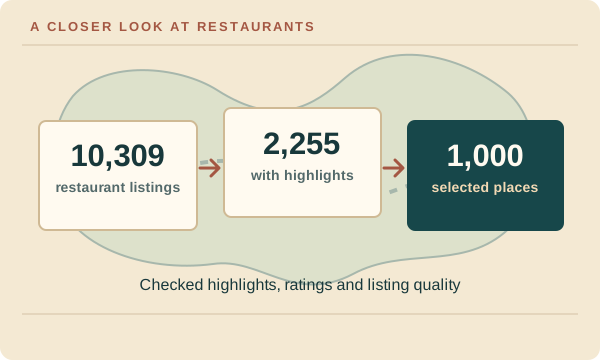
We had listings for 10,309 restaurants in Dubai. At 2,255 of them, we had checked Popular Mentions: short notes naming particular dishes or services that customers brought up in reviews, with those reviews to back them up. A restaurant without one might not have had its review analysis approved yet, or its reviews might not have given us a specific item we could verify.
We ranked the restaurants with checked highlights by star rating, the number of people who rated them, and the quality of their listings. Then we chose the top 1,000 restaurants to look for standout dishes.
Their written reviews covered everything from a birthday night out to the texture of a particular dessert. Someone might write Had a great time with friends—a lovely evening, but no dish to follow. We looked for the reviews that described what diners actually ate.
See the Restaurant Review Analysis for the review counts at each of the 1,000 restaurants.
03 / The close reading
A dish name isn’t a vote.
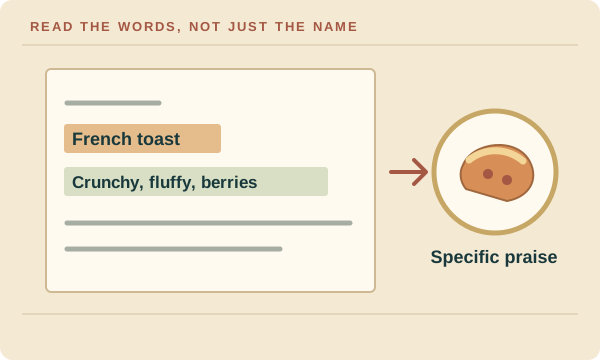
A reviewer might name French toast and describe its crunchy outside, fluffy middle, and berry compote. That is a clear opinion about the food itself. But “we ordered French toast and had a lovely time” tells us much less about the toast.
We looked for the food and an opinion that actually belongs to it. A review can support more than one dish, or none at all; the same review should not be counted twice for the same dish.
This French toast example comes from a real review, retold in our own words.
04 / The name maze
Same dish? Not so fast.
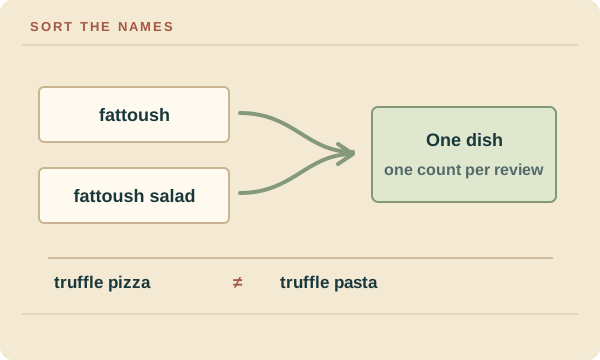
One diner writes fattoush, another fattoush salad. We also found mix grill and mixed grill platter. We checked what customers wrote, brought the names for the same dish together, and counted each review only once per dish.
Other names hide different plates: truffle pizza and truffle pasta each deserve their own place. And eggs and chorizo might be two separate orders. The reviews helped us see which names belonged together and which should stay apart.
05 / The menu sort
Not everything on a menu is a dish.
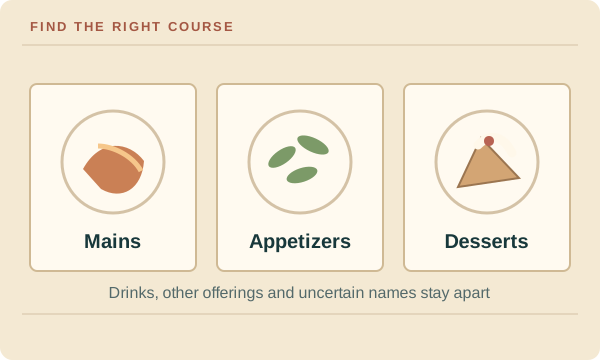
A named plate can join the dish board. Drinks, sauces, whole meal experiences, and non-food offerings belong in different piles. A broad label like “breakfast” is not automatically a vote for a specific plate.
Then comes another judgment: Mains, Appetizers, or Desserts? A soft-shell crab bao can read as a small plate while soft-shell crab tacos can be the main event. We looked at each dish as diners described it and sent uncertain cases back for a closer read.
06 / Check the review
We checked the review, not just the AI answer.
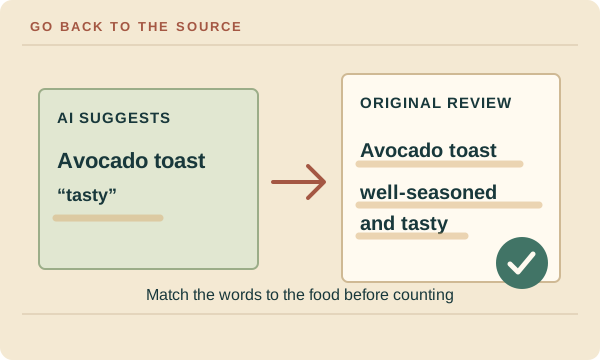
AI helped us find possible dish votes, but it had to show us the review words behind each one. In one review, a diner described egg avocado toast as well-seasoned and tasty, and also mentioned a smoothie. We checked the original review: the words about the toast could support a toast vote; the smoothie comment could not. If AI pointed to the wrong item, or supplied words the diner never wrote, we did not use that passage as evidence.
Then we asked whether the praise belonged to that dish. Suppose someone wrote: “We ordered pizza, pasta, and salad. Everything was great.” That praises the meal, but it does not tell us which dish was great. We would look more closely at the full review and, if it never became clear, leave those individual dish votes out rather than guess.
07 / The corrections desk
The hard calls weren’t all alike.
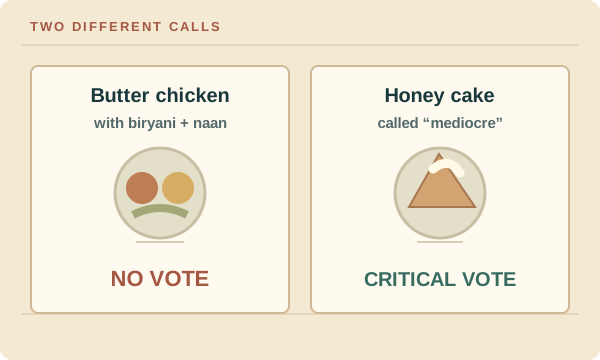
In one review, praise could not be tied to a single dish. In another, a price complaint came with a clear judgment of the cake. These are real cases, retold in our own words.
A diner mentioned butter chicken, biryani, and naan together, then praised the food as a whole. We didn’t count a butter chicken vote because that praise wasn’t specific to the butter chicken.
A diner complained about the café’s prices, then called the 75 AED honey cake mediocre, though they said another dish was good. Price alone would not tell us what they thought of the cake. Calling the cake mediocre does, so we counted a critical honey cake vote.
08 / By the numbers
From a city of reviews to 65 dishes.
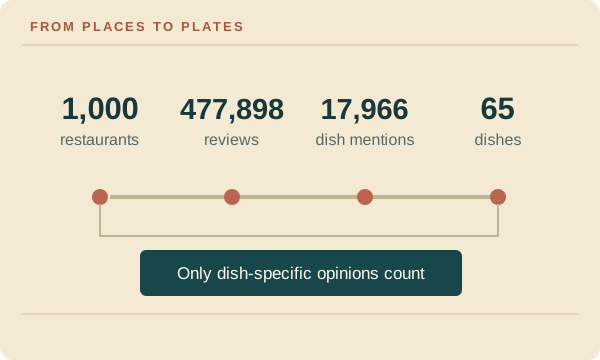
From 10,309 Dubai restaurant listings, we found 2,255 with checked customer highlights naming a specific dish or service. We ranked those restaurants by star rating, how many people rated them, and listing quality, then chose 1,000 for the dish study.
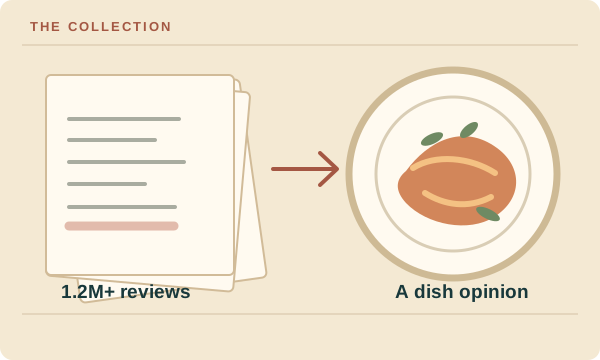
Of the more than 1.2 million written reviews, 477,898 contained food mentions and formed the deeper analysis set. We needed to find which dishes people actually described and what they thought of them. The full collection wasn’t limited to food reviews: many were about the service, the setting, or a night out. Together, the reviews in the deeper analysis set held about 98 million characters of customer writing. Only opinions about a particular dish could become votes for it.
Tiramisu drew 1,073 favorable mentions and 126 critical ones: 947 net favorable mentions.
Sea bass ceviche drew 24 favorable mentions and no matched criticism: 24 net favorable mentions. Both dishes made the 65; their review stories have very different volumes.
09 / The board
What the ranking actually says.
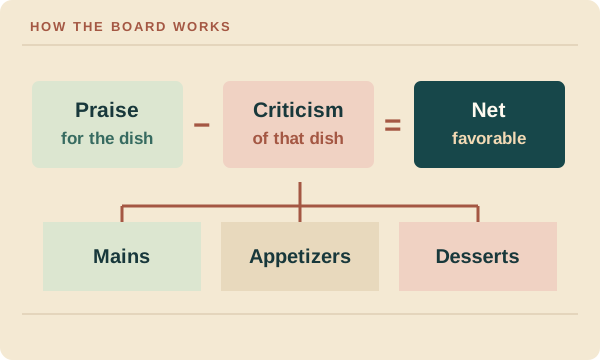
For Mains, Appetizers, and Desserts, we count clear praise for a dish and subtract clear criticism of that same dish. A complaint about the visit as a whole doesn’t count against the food.
The board follows the opinions diners wrote about food at those 1,000 restaurants. (See the Restaurant Review Analysis.) It’s a guide to the dishes people loved enough to describe after a meal. Now for the fun part: seeing which dishes made the board.
Explore the dishes